What to Expect at Your First Exercise Physiology Session
Your first exercise physiology session is mostly about getting to know you. The exercise physiologist asks about your health, disability, current activity and goals, then looks at how you move, often with some simple tests. You'll usually leave with a few exercises to start and a plan for what comes next. Wear comfortable clothes and bring any aids you use.
What Happens During the First Session?
An assessment, a talk about goals, and a first few exercises.
- Questions about your health history, disability, medications, symptoms and what you do day to day
- A look at how you move: strength, balance, walking or wheeling, transfers, endurance
- Agreeing goals, like getting in and out of a car more easily or walking to the shops
- Trying some exercises so the exercise physiologist can see what suits you
- A plan: how often, where, and what you can do between sessions
Healthdirect describes this as assessing your physical condition, movement, symptoms and health history, then creating a personalised plan that suits your abilities and goals.
What Should You Bring?
Anything that helps the exercise physiologist see how you really manage.
- Comfortable clothes and shoes you can move in
- Mobility aids, glasses, hearing aids or communication devices you use every day
- A list of medications and any reports from doctors or therapists
- Your NDIS plan, or the part showing capacity building funding
- Someone who knows you well, if that helps
Looking for an Exercise Physiologist?
We'll connect you with a practice with accredited exercise physiologists that may have space.
What Should You Ask Beforehand?
Costs, length and where it happens, so there are no surprises.
- How long is the first session, and what does it cost, including travel?
- Is the first session at home, a clinic or somewhere else?
- Do you need anything set up, like space or a chair?
- Will there be a written program or report, and is that charged?
Tell them about bad days
If your energy, pain or symptoms change from day to day, say so. A good program allows for the hard days too.
Free Family Guide
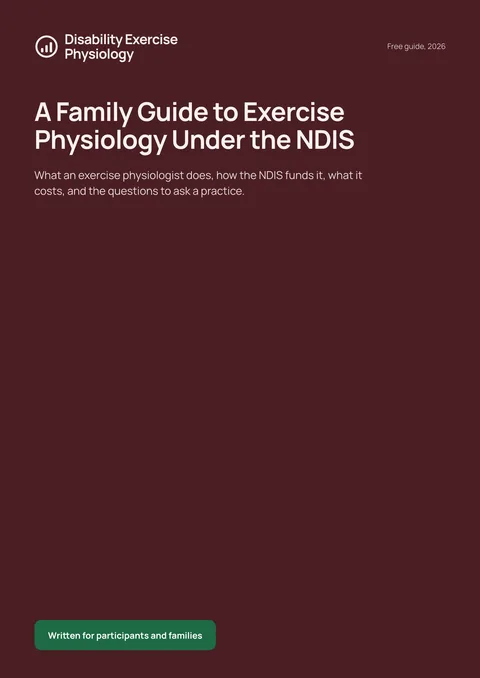
Free PDF, sent to your inbox.
Questions People Ask
Will the first session be hard?
It shouldn't be. The first session is mostly about understanding you. The exercise physiologist adjusts everything to what's safe for you.
Can a support worker or family member come?
Yes. It often helps, especially if they'll help with the program between sessions.
What if I'm unwell on the day?
Let the practice know. Check the cancellation terms: for therapy, short notice means less than 2 clear business days.
Keep Reading
- Finding and choosing oneHow to find and choose an NDIS exercise physiologist: check ESSA accreditation, registration for NDIA-managed plans, where sessions happen and what to ask.
- Home visitsHow NDIS exercise physiology works at home: who it suits, what a mobile exercise physiologist brings, travel charges, equipment and training family members.
- What exercise physiology costsNDIS exercise physiology rates for 2026-27: hourly price limits, travel for home visits, telehealth, reports, cancellations, group sessions and who pays.
- Telehealth sessionsHow telehealth exercise physiology works under the NDIS: when video sessions suit, what the price limits are, what you need at home, and the claiming rules.
We share your details with one provider at a time, never a list. Privacy policy